 YouTube
History's Agenda
Exploring recent and historic events that have defined America, this podcast is perfect for understanding the foundations of American culture. Have you always wondered about the events that led to the deaths of JFK or the story of Son of Sam? What about the full story behind the Founding Fathers? Each episode of History's Agenda provides detailed storytelling of these issues and many others. This is an ideal podcast for fact-hungry listeners.
Our Video Podcasts
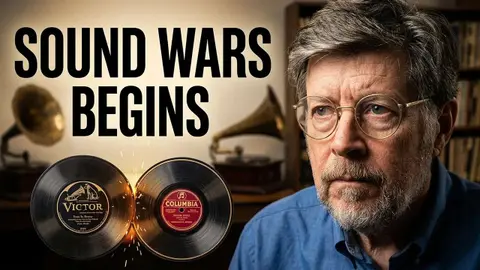
Early Recording Battles: The Fight for the Future of Recorded Sound.
We talk through how Berliner discs are made, why they are louder and
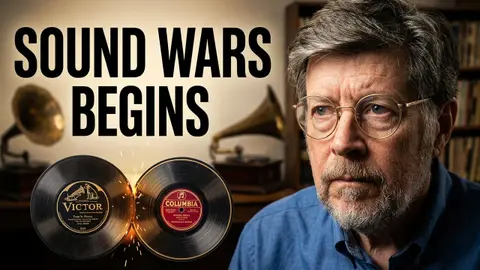
Early Recording Battles: The Fight for the Future of Recorded Sound
Acid-etched zinc discs, nearly blank labels, bootlegged pressings, and courtroom knife fights over patents: the early disc recording era is wilder than most people realize. We pick up part three of our conversation with collector and historian Jack Stanley to map the real origin story of early disc records, from Emil Berliner’s first gramophone experiments to the rival companies that turn recorded sound into a global business.
We talk through how Berliner discs are made, why they are…
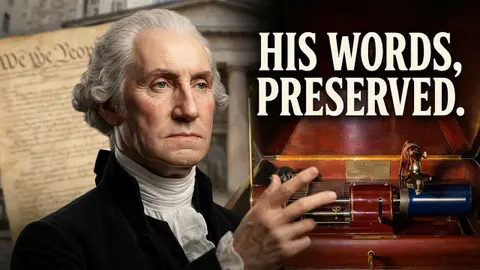
Washington's Farewell Address Performed by Harry E. Humphrey (1913) Played on the Edison Amberola 1A
“No words can increase the glory of the immortal Washington” is the kind of line that can turn a founder into a statue. We go the other direction and treat Washington as a living source of leadership lessons, pulling from the language of his farewell to ask what still applies to American politics right now.
We talk through the shift from celebration to substance: the dream of having Washington’s voice recorded, the image of him laying aside office and walking back to Mount Vernon as …
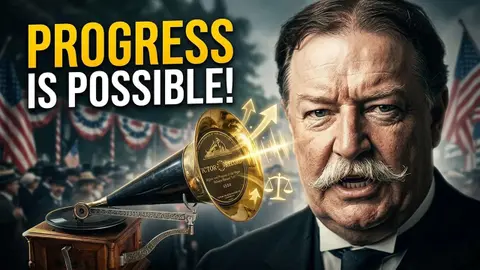
Rise and Progress of the Negro: William Howard Taft gives a campaign speech on August 5, 1908
Rise and Progress of the Negro: William Howard Taft gives a campaign speech in Hot Springs, Virginia, on August 5, 1908 in which he stresses the advancement of the Negro since his freedom from slavery and the Republican platform demanding justice to all men and enforcement of the 13th, 14th, and 15th amendments of the Constitution.
Listen to a rare William Howard Taft speech on this vintage Victor record. Hear the 1908 recording Rights and Progress of the Negro.
This video fe…
Rise and Progress of the Negro: William Howard Taft gives a campaign speech on August 5, 1908
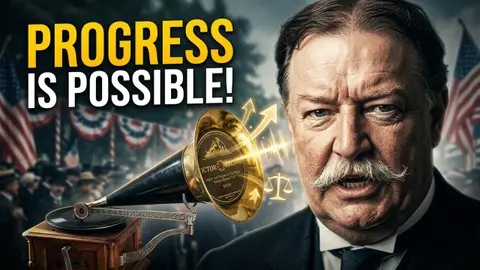
Rise and Progress of the Negro: William Howard Taft gives a campaign speech in Hot Springs, Virginia, on August 5, 1908 in which he stresses the advancement of the Negro since his freedom from slavery and the Republican platform demanding justice to all men and enforcement of the 13th, 14th, and 15th amendments of the Constitution.
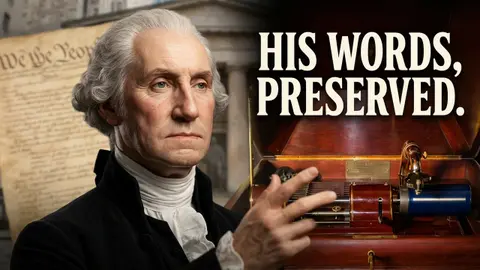
Washington's Farewell Address Performed by Harry E. Humphrey (1913) Played on the Edison Amberola 1A
“No words can increase the glory of the immortal Washington” is the kind of line that can turn a founder into a statue. We go the other direction and treat Washington as a living source of leadership lessons, pulling from the language of his farewell to ask what still applies to American politics right now.
We talk through the shift from celebration to substance: the dream of having Washington’s voice recorded, the image of him laying aside office and walking back to Mount Vernon as …
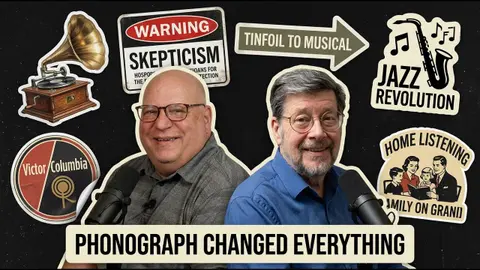
Part Two: The Phonograph Changed Everything
Recorded sound is so normal now that we barely notice it, but the first time people heard a phonograph it felt impossible. Jack Stanley returns to unpack the social history of early sound recording: the disbelief, the tests, the accusations of fraud, and the moment audiences realized a machine could capture a human voice and play it back on command. We talk about Edison’s instincts for showmanship and why the phonograph succeeds not just as an invention, but as a public spectacle.
Fr…
Thomas Edison: Part 1 - "The Wizard Of Menlo Park"
Thomas Edison didn’t just invent. He performed. Historian Jack Stanley joins us to unpack the side of Edison most biographies smooth over: the theatrical, image-aware operator who knew how to turn a technical breakthrough into a world-stopping moment. We talk about what Jack learned from deep research in Edison’s notebooks and private library, plus stories passed down by people who actually knew the family, including insights from Theodore Edison.
We dig into the early phonograph sto…
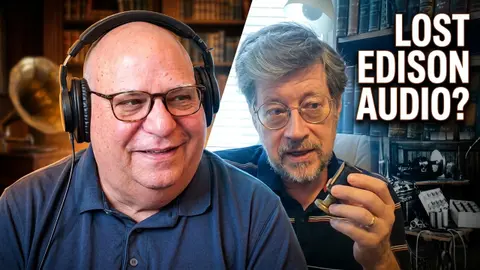
Inventing Motion Pictures with Sound: Thomas Edison, WKL Dixon, a stick of gum and a Broken Cylinder
The remarkable story of how a stick of Wrigley's chewing gum rescued a priceless piece of cinema history unfolds in this fascinating exploration of Edison, innovation, and overlooked genius. When historian Jack Stanley joins us to discuss a historic photograph from Edison's laboratory, what emerges is an incredible tale of rediscovery and ingenuity spanning over a century. Recorded July 2025.
While Thomas Edison gets credit for inventing motion pictures, the real pioneer wa…
"The Ideal Republic" is from William Jennings Bryan’s 1900 presidential nomination acceptance speech
Another Item from History's Agenda Historical Speech Series. "The Ideal Republic" is a famous peroration from William Jennings Bryan’s 1900 presidential nomination acceptance speech (often titled "Imperialism"). It outlines a vision of America as a moral guide against global empire-building, later recorded by Thomas Alva Edison on wax cylinders in 1908 and re-released later.
Core Themes of the Speech
Anti-Imperialism: Bryan argued that the United States s…
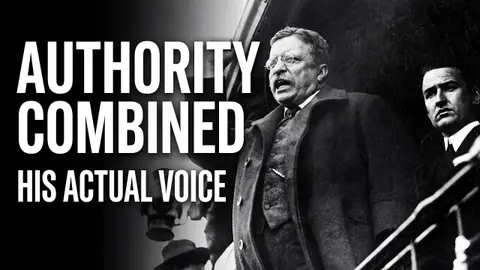
Social and Industrial Justice. Speech by Theodore Roosevelt 1912. Recorded 1919
Theodore Roosevelt's "Social and Industrial Justice" was a landmark 1912 Progressive Party platform calling for an eight-hour workday, minimum wage laws, the abolition of child labor, and worker protections. Roosevelt outlined these foundational working-class rights in his famous 1912 speeches and Edison recordings.
Listen On
